In the world of blockchain and cryptocurrency, few names carry as much weight as Ethereum. While its significance is often discussed in terms of smart contracts, decentralized applications (dApps), and the Web3 movement, the very letters that spell its name—E-T-H-E-R-E-U-M—hold clues to its identity, purpose, and vision. Each capital letter, in its own way, represents a pillar of Ethereum’s ecosystem, from its foundational technology to its global community. Let’s break down the alphabet of Ethereum to understand what makes it more than just a digital currency.
E: Ethereum (The Network Itself)
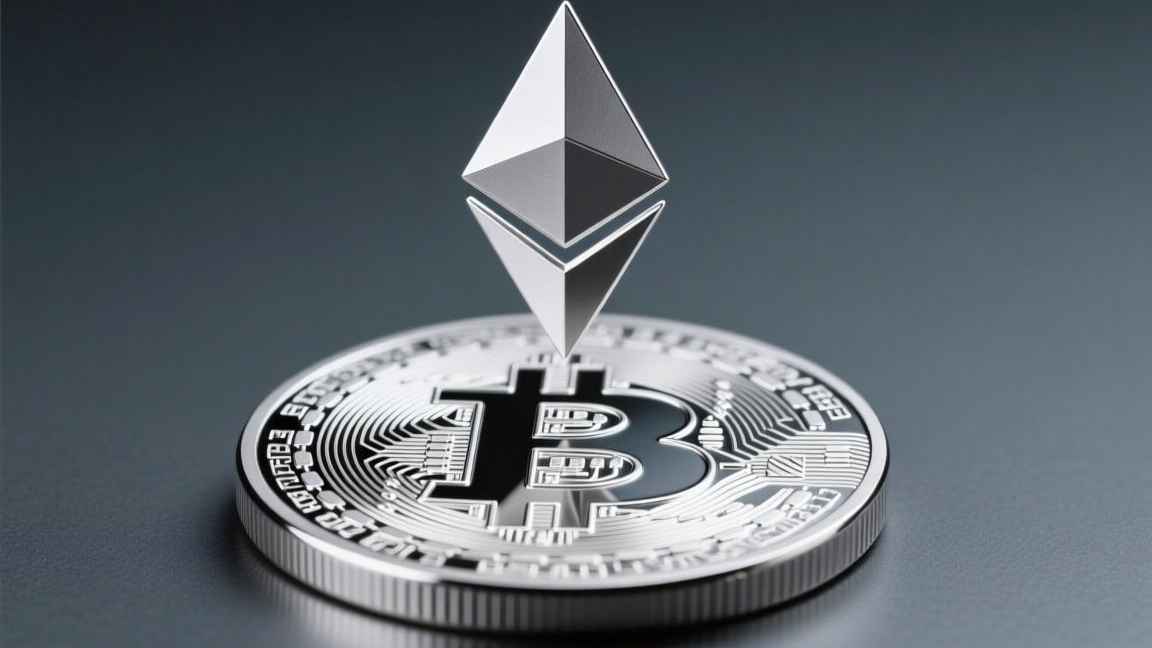
The first "E" stands for Ethereum itself—the decentralized, open-source blockchain platform that launched in 2015 by Vitalik Buterin. Unlike Bitcoin, which was designed primarily as a peer-to-peer electronic cash system, Ethereum’s core innovation was its "world computer": a network that enables developers to build and
T: Trust (The Foundation of Decentralization)
"Trust" is the invisible "T" in Ethereum’s alphabet. In traditional systems, trust is placed in banks, governments, or corporations to enforce rules and validate transactions. Ethereum replaces this with cryptographic trust: every transaction and smart contract execution is verified by a distributed network of nodes, ensuring transparency and immutability. Whether you’re swapping tokens, lending assets, or voting in a DAO (decentralized autonomous organization), you don’t need to trust a middleman—just the code and the network.
H: Hash (The Engine of Security)
Behind Ethereum’s seamless operations lies hashing, a cryptographic process represented by the "H." Hash functions (like SHA-3) convert input data into fixed-length strings of characters, ensuring that even a tiny change in input produces a completely different output. This is critical for two reasons: first, it secures blocks in the Ethereum blockchain, making tampering virtually impossible; second, it powers proof-of-work (and soon, proof-of-stake) consensus, ensuring all nodes agree on the state of the network. Without hashing, Ethereum’s security model would collapse.
E: Ether (The Lifeblood of the Ecosystem)
The second "E" stands for Ether (ETH), the native cryptocurrency of the Ethereum network. While Ethereum is the platform, Ether is the "gas" that fuels it. Users pay Ether to execute transactions, run smart contracts, and interact with dApps—this fee structure prevents spam and compensates validators for securing the network. Beyond its utility, Ether has become a store of value and a cornerstone of the digital economy, bridging the gap between technology and finance.
R: Rigor (The Pursuit of Innovation)
"Rigor" defines Ethereum’s commitment to continuous improvement. The network is not static; it undergoes regular upgrades (like London, Merge, and Shapella) to enhance scalability, security, and sustainability. For example, the Merge in 2022 transitioned Ethereum from energy-intensive proof-of-work to proof-of-stake, reducing its carbon footprint by ~99.95%. This "R" reflects the community’s dedication to solving real-world problems, whether through layer-2 scaling solutions (e.g., Arbitrum, Optimism) or upgrades like Ethereum Improvement Proposals (EIPs).
E: Ecosystem (The Web3 Universe)
Ethereum’s true power lies in its ecosystem, the fifth "E." It’s not just a blockchain—it’s a universe of interconnected projects: DeFi (decentralized finance) protocols like Uniswap and Aave, NFT marketplaces like OpenSea, DAOs like ConstitutionDAO, and infrastructure tools like Chainlink and The Graph. This ecosystem has turned Ethereum into the backbone of Web3, enabling everything from decentralized lending to digital art ownership. Developers, creators, and users worldwide contribute to this vibrant, self-sustaining network.
U: Utility (Beyond Hype to Real-World Use)
"Utility" is the "U" that separates Ethereum from hype-driven experiments. While many blockchains focus on speculation, Ethereum prioritizes solving tangible problems: it enables cross-border payments without banks, allows artists to monetize work directly via NFTs, and provides financial services to the unbanked through DeFi. From supply chain tracking to voting systems, Ethereum’s utility is expanding into industries far beyond crypto, proving that decentralized technology can have a real-world impact.
M: Metamorphosis (Ethereum’s Evolution)
The final "M" stands for metamorphosis—Ethereum’s ongoing transformation. What began as a proof-of-work blockchain is now a scalable, sustainable, and multi-layered network. With plans for sharding (to increase transaction throughput) and continued focus on user experience, Ethereum is constantly evolving to meet the demands of a growing global community. This "M" symbolizes resilience: just as a caterpillar becomes a butterfly, Ethereum is adapting to become a more efficient, inclusive, and powerful platform for the future.
Conclusion: More Than Letters—A Vision
Ethereum’s alphabet—E-T-H-E-R-E-U-M—is more than a name. It’s a story of innovation, trust, security, and community. From the network itself ("E") to its global ecosystem ("E"), each letter represents a piece of a larger vision: a decentralized internet where users control their data, value flows freely, and technology serves humanity. As Ethereum continues to evolve, its alphabet will grow—but its core mission remains unchanged: to build a more open and equitable digital world.
In the end, Ethereum’s capital letters aren’t just symbols. They’re the building blocks of a revolution.

